In the workspace
Beside the line editor.
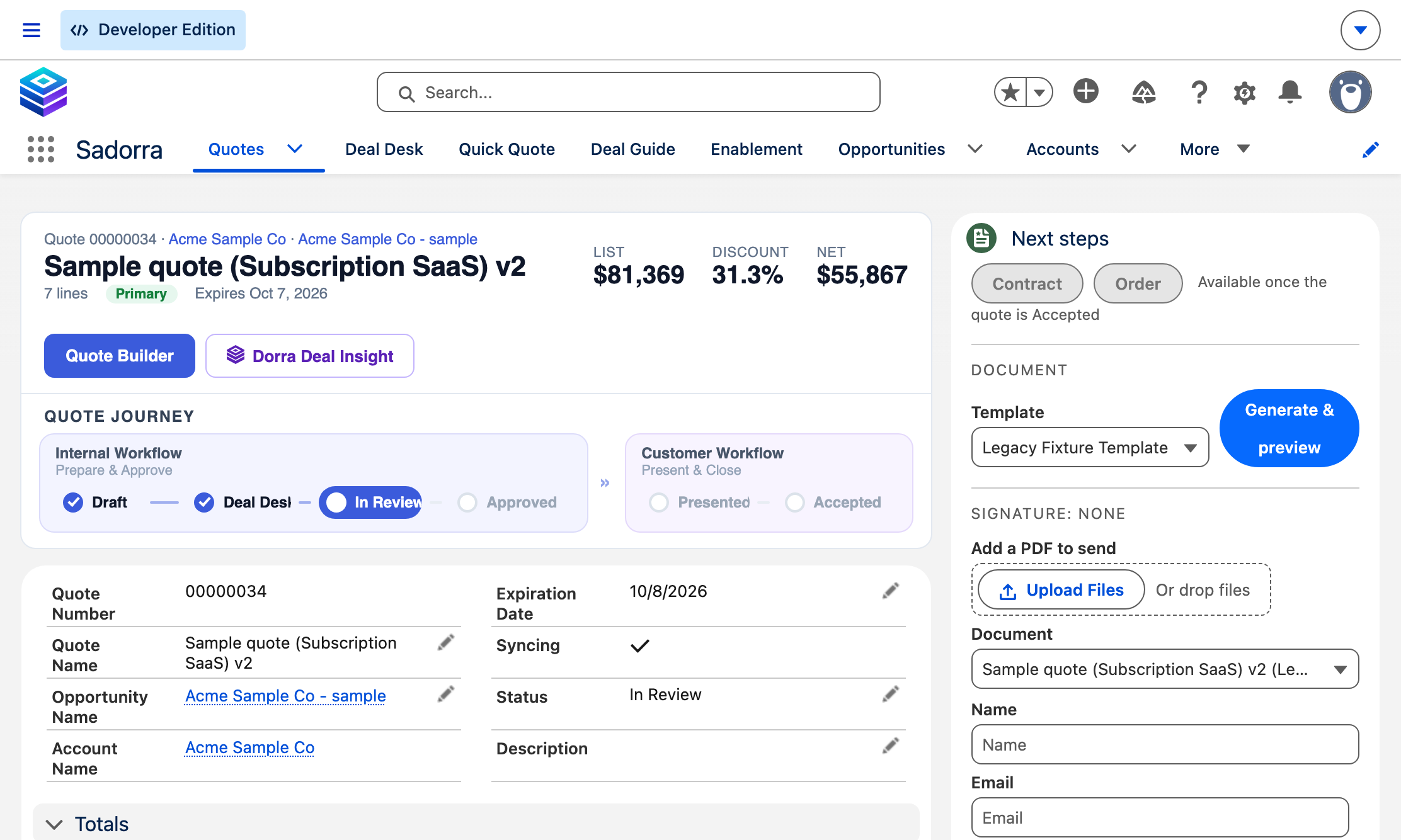
Most sellers will keep quoting where the quote is. Dorra sits in the Sadorra Quote Workspace on the standard Salesforce Quote, reading the live trace, not in a chat window somewhere else.
Private early access
Describe the deal in a sentence and Dorra hands back a priced draft, in the quote workspace, in Claude, or from any agent over Sadorra’s MCP server. The number itself comes from deterministic code, never a model. Coming off Salesforce CPQ, you bring your configuration with you.
Built for Salesforce MCP server, built Deterministic pricing Verified migration
 Meet Dorra
Dorra is Sadorra’s AI agent. She builds the quote, explains the price and clears the approval. She never sets the number.
01The product
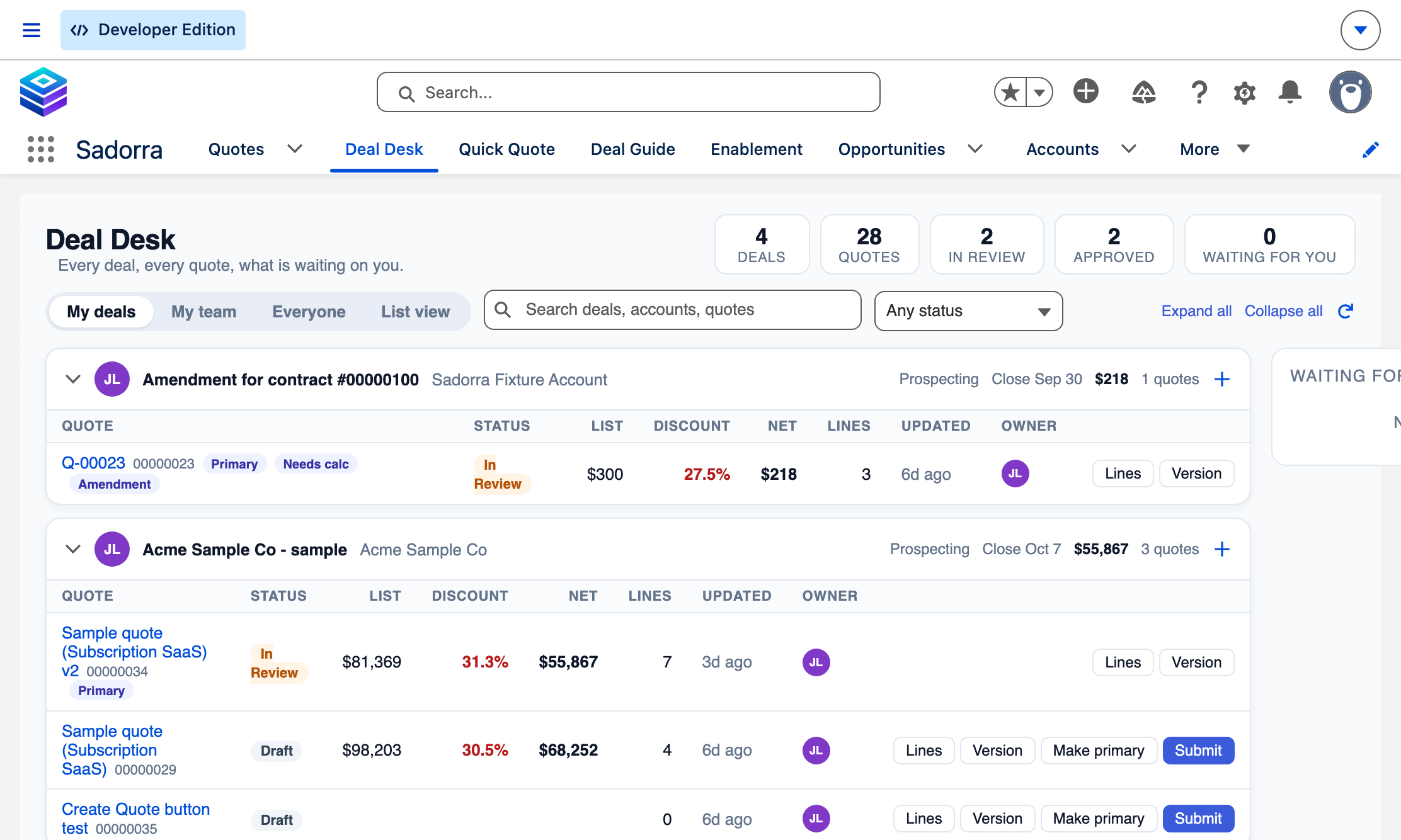
Quoting, configuration, pricing and approvals in one workspace, on the standard Quote, in the org you already run.

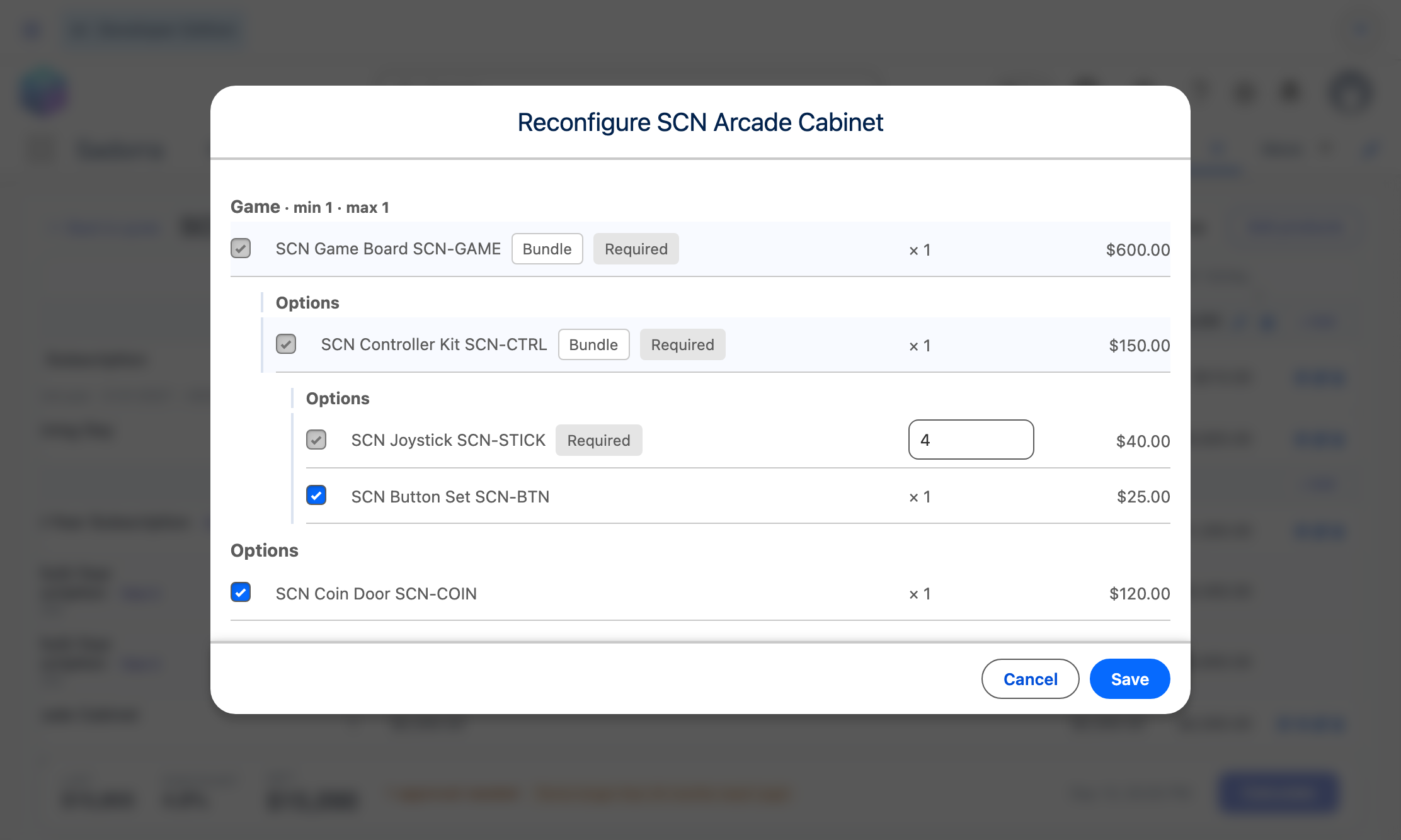
Guided products and bundles.
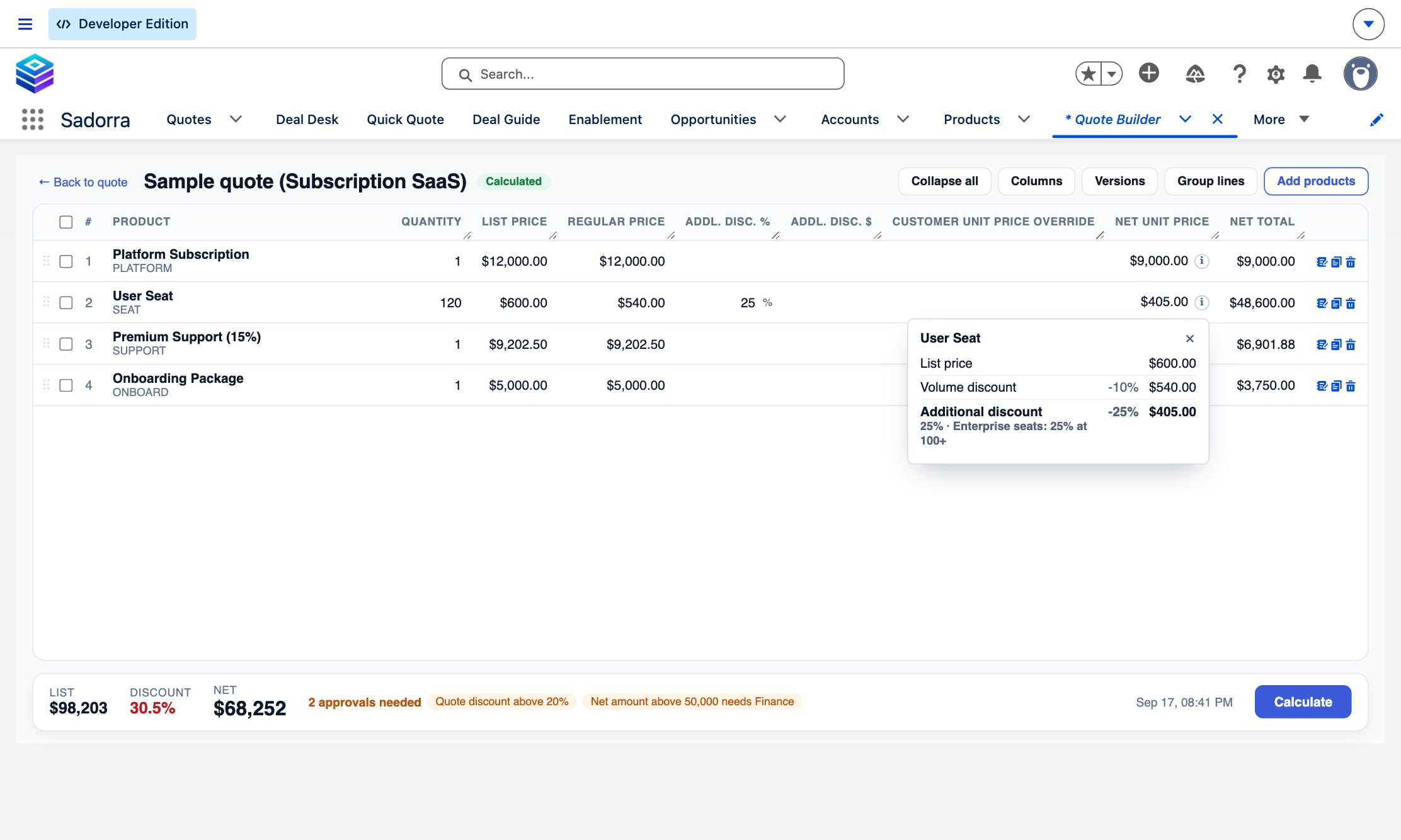
Transparent, explainable pricing.
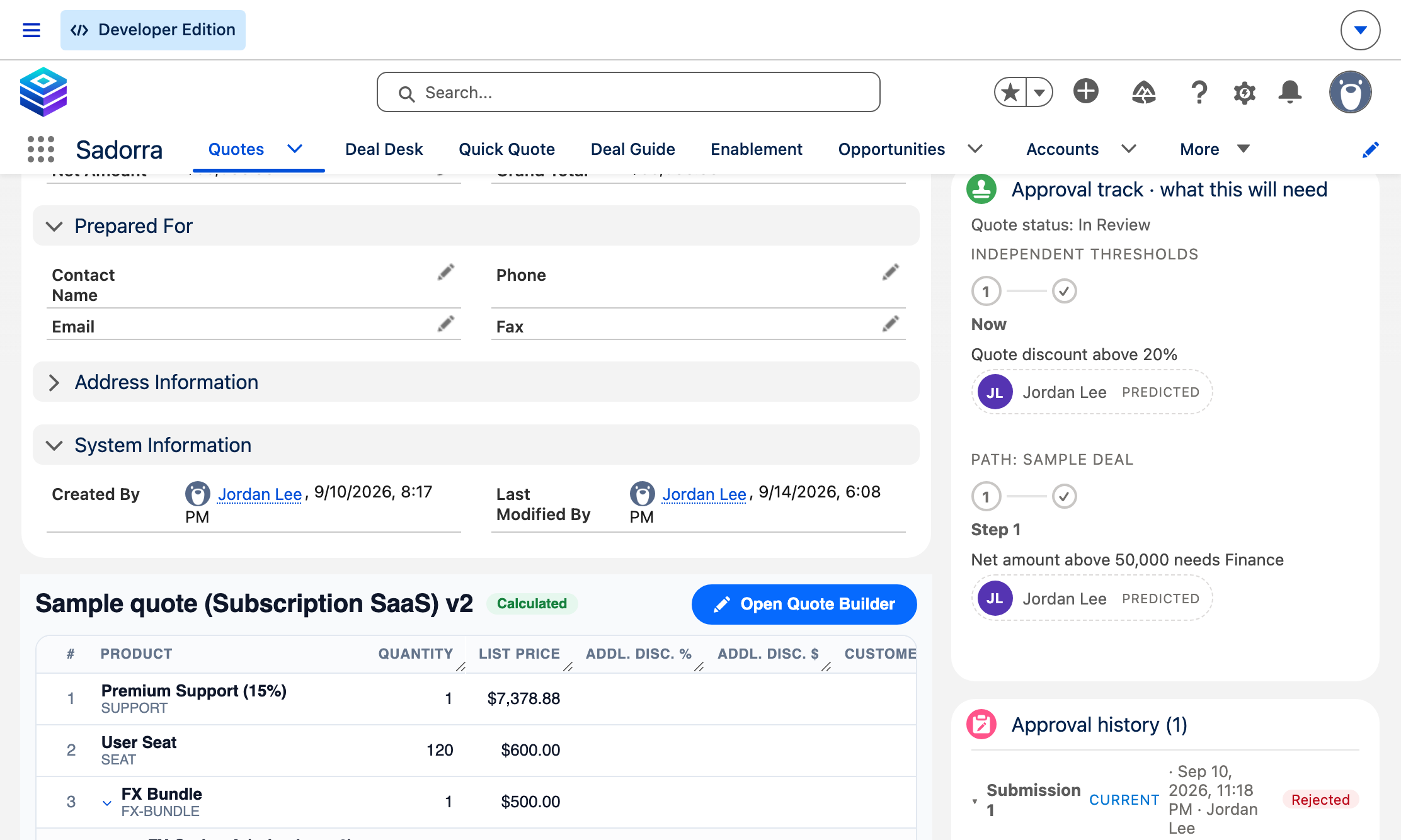
Journey, approvals and next actions.
02Dorra AI
Built into the workspace, and reachable from anywhere.
Dorra reads the same pricing trace, rules and approval paths the engine uses. She can draft a rule, assemble a quote from a sentence, or say exactly why a line is blocked, and hand you the action that clears it.

Wherever the deal is
With AIforce, Salesforce says the platform should come to you: in Claude, in Slack, in Lightning, in whatever agent you run. We agree. Sadorra ships an MCP server, so Dorra’s quoting and deal intelligence are tools any agent can call, under the org’s own permission sets. Nothing is written until a person confirms.
In the workspace
Most sellers will keep quoting where the quote is. Dorra sits in the Sadorra Quote Workspace on the standard Salesforce Quote, reading the live trace, not in a chat window somewhere else.
In Claude and other assistants
Connect Sadorra’s MCP server to Claude, ChatGPT or any MCP client. Ask for “500 seats of Enterprise, three years, same discount as last year for Acme” and get lines, totals, assumptions and the open questions. Confirm to create the real quote.
In your own agents
Agentforce agents, Slack workflows and internal automations call the same tools. Every call runs as the user, with the org’s permissions, against the same deterministic engine the workspace uses.
Sadorra MCP server · built
quick_quote_draftdescribe the deal, get a priced draftquick_quote_answeranswer the open questions, re-pricedquick_quote_confirmcreate the real quote (the only call that writes)deal_insightcomparable won deals, margin, approvals it will needcalculate_quoterun the pricing engine on any quoteThe boundary holds on every surface: Dorra assembles, explains and guides. The engine sets the number. No language model ever decides a price.
Dorra and the MCP server — the tools, the guardrails, and quoting from Claude

03The platform
Not four products that hand off to each other. See the roadmap for what is built, in build and planned.
Line editor, multi-year segments, versions and compare.
Bundles, options, constraints and nested configuration.
The full waterfall, price rules and calculator scripts.
Any object, ordered and parallel paths, approve from anywhere.
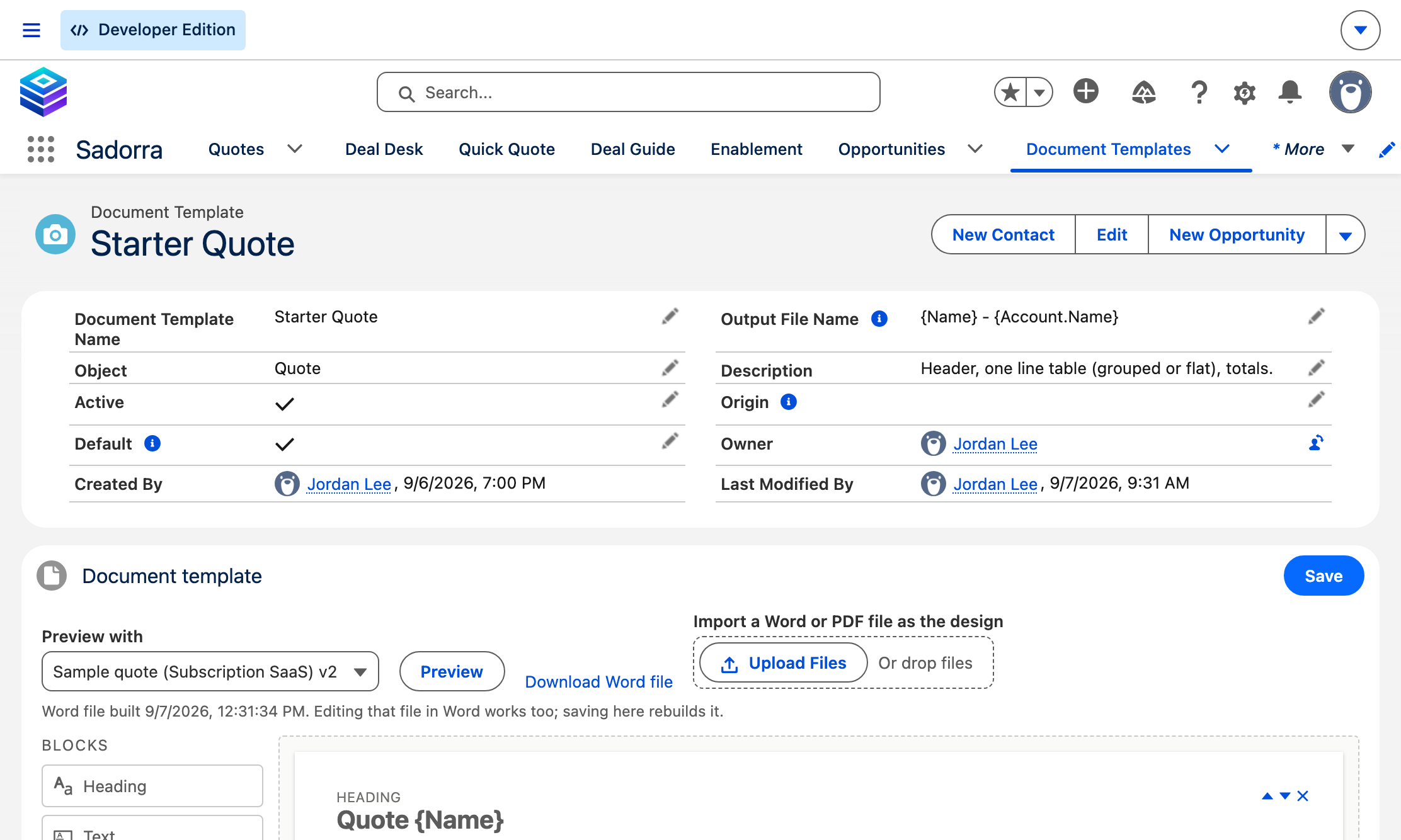
Template builder, clause library, PDF and Word.
Amendments, renewals and e-signature on one engine.
Assets, co-terms, renewal risk and usage.
Quotes from a sentence, explains and guides, here or from any agent. Never prices.
04Getting started
Sadorra is built for teams leaving Salesforce CPQ and for teams who never had a CPQ at all. Neither one is the fallback path.
Coming from Salesforce CPQ
Products, bundles, price rules, discount schedules, calculator scripts, templates, terms, contracts and subscriptions are read out of your org and translated. Then every migrated quote is recalculated and compared to the original, to the cent.
No CPQ today
Starter packs for subscription SaaS, hardware and services, and usage-based models ship with a sample catalog, pricing rules, discount schedules, approval thresholds and a document template. Import your catalog from CSV or your existing products, describe your pricing in plain language for Dorra to draft, and edit from there.
A first-hour checklist, not a six-month implementation.
05Migration
Bring your configuration with you.
Salesforce CPQ
Sadorra Migration Engine
Reads the configuration in the org, translates it, and reports every item as Automatic, Review, Expert or Outside the migration, with hours attached.
Sadorra
Your catalog, rules and contracts running on the modern engine, not retyped from a blank page.
The migration report is generated against your own org, before you commit to anything. It tells you what carries across by itself, what needs a look, and what a person still has to rebuild.
Automatic
Read, translated and loaded with no one touching it. The majority of a typical catalog and rule set.
Review
Carried across, but worth a check: a legacy field with no exact equivalent, a script that behaves slightly differently. Minutes each, not days.
Expert
Not translatable today. Lookup-based price rules, dynamic bundles, Visualforce template sections, guided selling. A person rebuilds these in Sadorra.
Outside the migration
Everything you built around CPQ that no tool can carry: your own Apex, flows, validation rules, reports, and other packages sitting on top of it.
No migration is zero-effort, and anyone who tells you otherwise has not looked at your org. The point of the report is that you see the size of what is left before you commit, priced in hours, against your real configuration, rather than discovering it in month three of an implementation.
Sadorra recalculates migrated quotes and compares results line by line against the original pricing behavior, separating rounding from genuine differences. You get a report before go-live, not an assurance from a seller after it.

How Salesforce CPQ migration works — what carries across, and in how many hours
06Why Sadorra
Every CPQ promises accurate quotes and fewer bottlenecks. Those are outcomes. These are the mechanisms underneath them.
See which rule changed a price, and why.
Every calculation emits a per-line, per-stage trace: the value before and after each step of the waterfall. It is what Dorra reads to explain a price, and what the migration report compares against.
Compare legacy and Sadorra results before go-live.
Reading a configuration is the easy half. Knowing it still prices the same is the half that decides whether a migration is safe to run.
Dorra can build, explain and guide, from anywhere.
Drafting rules, reading the trace to answer “why did this change?”, translating legacy configuration, and assembling a quote from a sentence, in the workspace or from any agent over MCP.
AI does not calculate pricing.
Pricing is deterministic code: the same quote returns the same number every time, and no language model sits between a customer and the figure they are quoted.
AI where it helps. Determinism where it matters.
Also true, and less marketable: Sadorra calculates outside the platform heap limit and writes back in chunks, so a long quote is a bigger job rather than a failed one.
07Product experience
Screens from the working product. More are being captured as early access opens.
08The name
Automate the work. Orchestrate the deal. Control the rules. Add intelligence where it matters, and nowhere it doesn’t.
09Proof of progress
Sadorra is in private early access. Core quoting, pricing, approvals, documents, migration and contract functionality is already built and being validated before general availability.
Built means working and verified against real configurations, not that every feature is generally available. See the full roadmap. Last updated September 2026
10Early access
Sadorra is being validated with a short list of early customers before broader availability. They get a working look at what is built, and their gaps and edge cases shape what gets built next.
Prefer to talk first? Talk to us.
You’re on the early access list.
